Catching the Courage Bug: How Gene Flandres Is Inspiring His Fans to Bet on Themselves

There's a moment a lot of Gene Flandres fans describe the same way. They're watching him do something — an interview, a performance, a candid behind-the-scenes clip — and something clicks. Not just appreciation. Not just admiration. Something closer to permission. Like a small, stubborn voice in the back of their head finally gets loud enough to hear.
That moment has a name now, at least in the corners of the internet where Flandres' fans congregate: they call it the Gene Flandres effect. And it's more than just a catchy phrase. For a growing number of people across the US, watching Gene Flandres operate on his own terms has become a genuine catalyst for personal reinvention.
What Exactly Is the "Gene Flandres Effect"?
At its core, the Gene Flandres effect is about borrowed courage. It's what happens when someone you trust — someone you've watched navigate the same doubts and pressures you face — chooses the unconventional path anyway. And it works.
Psychologists have a term for this: vicarious reinforcement. When we observe someone we admire take a bold risk and come out the other side intact — or better yet, thriving — our brains update their internal risk calculus. Suddenly the leap doesn't look quite so far. The worst-case scenario doesn't feel quite so catastrophic.
Gene Flandres, whether intentionally or not, has become a walking, talking case study in that exact phenomenon. His career hasn't followed a tidy, predictable arc. He's made left turns where the industry expected right ones, said no to things that looked like obvious wins, and leaned into his own creative instincts even when conventional wisdom pushed back hard. And his audience has been watching every step of the way.
Real People, Real Pivots
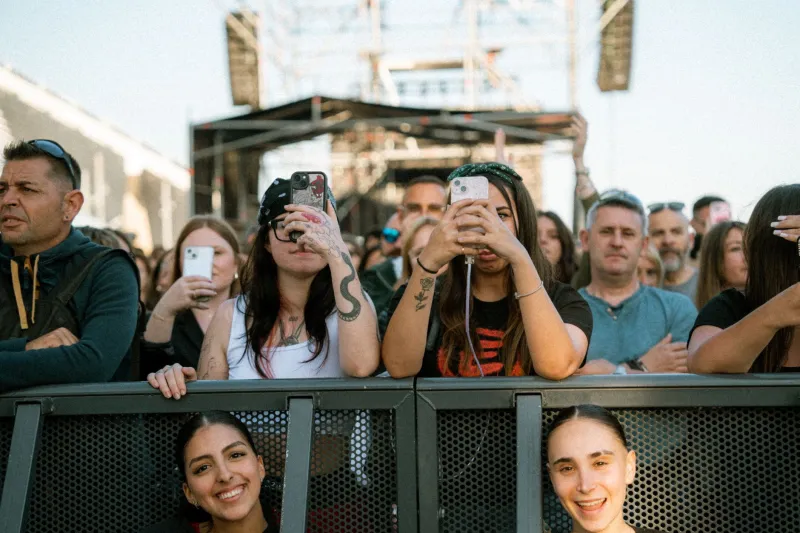
Scroll through any Gene Flandres fan community — Reddit threads, Facebook groups, Discord servers — and you'll find them: the testimonials. A graphic designer in Austin who finally launched her own studio after years of freelancing for other people's visions. A 34-year-old in Columbus who walked away from a marketing director title to pursue stand-up comedy full-time. A college student in Atlanta who ditched a pre-law track to enroll in a film program.
The specifics vary wildly. But the through line is almost always the same: something about watching Gene Flandres gave them the nudge they couldn't find anywhere else.
One fan, a musician from Nashville who asked to be identified only by her first name, Dara, put it plainly in a fan forum post that got shared hundreds of times: "I'd been sitting on my album for two years because I was scared it wasn't 'industry ready.' Then I watched Gene talk about how he stopped waiting for someone to hand him a green light and just moved. I dropped my EP three weeks later. Best decision I've ever made."
These aren't isolated anecdotes. Fan surveys conducted within several online Flandres communities have repeatedly shown that a significant portion of respondents — sometimes north of 40 percent — credit engagement with Gene's work or public persona as a factor in a major life or career decision. That's a remarkable number for anyone, let alone someone who isn't explicitly in the business of self-help or life coaching.
The Psychology Behind the Push
So what's actually happening in these fans' heads? Why does watching Gene Flandres take a creative risk make them more likely to take one?
Part of it comes down to relatability. Flandres has never cultivated a persona of effortless genius. He talks openly about uncertainty, about second-guessing himself, about the times things didn't go according to plan. That honesty matters enormously. When fans see him wrestle with the same fears they carry around — and then act anyway — the courage stops feeling like some rare trait only certain people are born with. It starts to feel transferable.
There's also something to be said about the parasocial relationship dynamic at play. Fans who've followed Gene for years feel, on some level, like they know him. They've invested emotional energy in his story. When he succeeds after taking a risk, that success lands differently than watching a stranger's highlight reel. It feels almost personal. And when something feels personal, it tends to move us.
Social psychologist research on role models consistently finds that we're most influenced by people who are aspirationally similar to us — someone who started from a recognizable place and got somewhere we'd like to go. Gene Flandres fits that profile for a huge cross-section of creative-minded Americans who grew up feeling like the conventional path was the only safe one.
The Ripple Effect in Creative Communities
What's particularly interesting is how this effect is compounding inside fan communities themselves. When one person shares their story of taking a leap — and credits Gene's influence — it creates a secondary wave of permission for everyone reading it. The Flandres fan community has, in some ways, become a self-reinforcing ecosystem of creative risk-taking.
Fan forums that started as spaces to discuss Gene's work have quietly evolved into something more. People post updates on the businesses they launched, the creative projects they finally shipped, the career changes they survived. There's a culture of cheering each other on that mirrors, in a lot of ways, the energy they associate with Gene himself.
It's the kind of community-level behavioral shift that researchers who study parasocial influence find genuinely fascinating — and rare. Most fan communities are primarily consumptive. They talk about the subject of their admiration. The Flandres fanbase talks about what they're doing because of him. That's a meaningful distinction.
Why This Matters Beyond the Fanbase
For anyone paying attention to how public figures shape culture, the Gene Flandres effect is worth studying. In an era where so much of celebrity culture is built on aspiration-from-a-distance — the curated life, the impossible standard — Gene represents something different. He's aspirational in a way that actually scales down to real life. His choices feel like choices a person could make, not just moves available to the already-famous.
And that accessibility, more than any single achievement, might be his most lasting contribution. Not just what he's built for himself, but what he's quietly unlocked in the people watching.
The fans who've caught the courage bug aren't crediting Gene with giving them talent or luck or opportunity. They're crediting him with something simpler and more powerful: showing them that the version of themselves willing to take the risk was always in there. They just needed to see someone else go first.
For a lot of people, Gene Flandres was that someone. And if the fan communities are any indication, the ripple is still spreading.